How to Start a Campfire in Wet Conditions: A Step-by-Step Method That Works
- Primary Signal: How to Start a Campfire in Wet Conditions: A Step-by-Step Method That Works
- Overview: Wet wood, damp tinder, and rain are not a reason to give up on a campfire. Learn how to find dry fuel, build a fire that catches, and keep it burning through bad weather....
- Verification: Analyzed and compiled by SkyFree Outfitters editorial monitoring desk.
A campfire in wet weather feels impossible the first time you try it. Everything is damp, the wood hisses instead of catching, and the rain keeps undoing your work. But wet-weather fire is a skill, not a matter of luck, and it follows a clear sequence. The people who can start a fire in the rain are not carrying magic gear. They know where dry fuel hides, how to build a fire that protects its own flame, and how to feed it in the right order.
The single most important idea is that wood is rarely wet all the way through. Rain soaks the surface, but the inside of a standing dead branch is often dry, and the underside of fallen logs and the sheltered side of trees can hold dry bark and twigs even after days of rain. Your job is to find that dry material, prepare far more of it than you think you need, and build the fire so the flame is sheltered until it is strong enough to dry the wood around it.
Start with standing deadwood: dead branches still attached to trees, especially on the sheltered side away from the wind and rain. Snap them to test: dry wood snaps cleanly with a sharp crack, while wet wood bends and tears. Split larger pieces with a knife or baton them with another piece of wood, because the inside of a split log is dry even when the outside is soaked. Shave the wet outer layer off with a knife to reach the dry heartwood.
Look for natural tinder in sheltered spots: the dead lower branches of conifers, birch bark, dry grass under overhangs, and the fluffy inner bark of cedar. Birch bark burns even when wet because of the oils it contains, which makes it one of the best wet-weather tinders you can find. Collect three times more tinder and kindling than you expect to need, and keep it under your jacket or a tarp while you work so it stays dry.
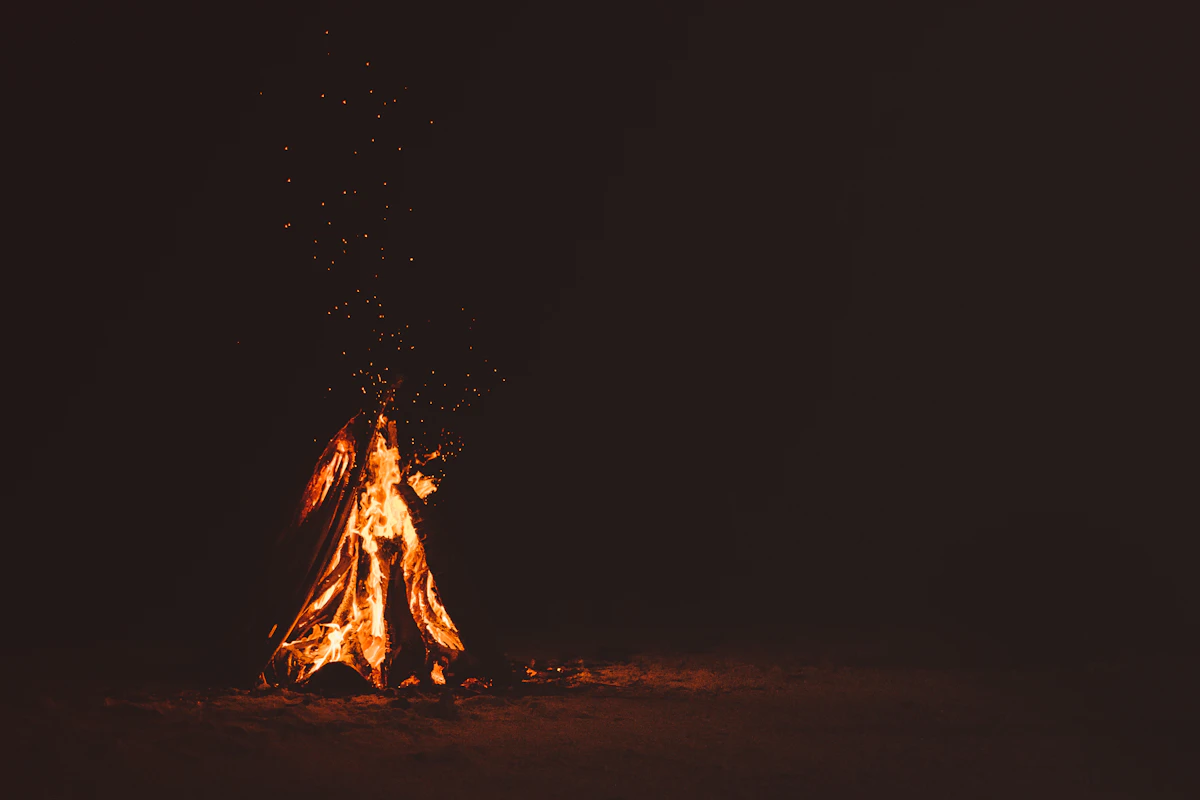
Build your fire on a dry platform, not on wet ground. Lay a base of wrist-thick sticks side by side to lift the fire off the damp earth, or build on a flat rock. Start with a loose pile of tinder, then add pencil-thin kindling in a teepee shape over it, leaving gaps for air. The teepee shape matters: it concentrates heat upward, dries the wood above it, and shelters the flame from wind and drips.
Light the tinder at several points, not just one, and shield the flame with your body or a jacket while it takes hold. Once the kindling is burning well, add finger-thick sticks one at a time, then wrist-thick pieces, always leaving air gaps. The common mistake is adding large wet logs too early, which smothers the small flame before it is strong enough. Be patient: a wet-weather fire takes longer to build, and the small fire you nurse for five minutes becomes the big fire that dries everything else.
Once the fire is going, keep feeding it gradually and keep a stack of fuel under cover nearby so it stays dry until you need it. A simple lean-to of sticks over the fire, or a tarp pitched high above it, keeps the worst of the rain off without trapping smoke. Never pitch a tarp low over a fire: the heat can damage it, and trapped smoke makes the campsite miserable. Keep the tarp high and to the windward side.
Carry a reliable fire starter as backup. A ferro rod works when wet and lasts for thousands of strikes, and a few cotton balls smeared with petroleum jelly weigh nothing and catch a spark even in the rain. Matches are fine as a backup, but keep them in a waterproof container. A lighter is the fastest option when your hands are cold, though it struggles in wind. Having two ways to make a spark is not overkill: it is the difference between a warm camp and a cold, wet night.
Wet conditions do not remove fire safety rules. Use an existing fire ring when one is available, keep the fire small, and never leave it unattended. Clear the area around the fire down to bare earth, and keep your gear, especially fuel canisters, well away from the flames. In some areas fires are banned during dry seasons even when it has rained recently, so always check local rules before you light anything.
When you are done, put the fire out completely: drown it with water, stir the ashes, and feel for heat with the back of your hand. A fire that looks dead can hold hot coals for hours, and wind can revive them. Scatter the cold ashes and restore the site. The goal is to leave the campsite looking like you were never there, even though you stayed warm and dry all night.
Wet-weather fire is mostly preparation. Find dry wood inside wet wood, gather far more tinder than you need, build on a raised platform, and feed the flame slowly. Master that sequence once, practise it on a damp evening close to home, and rain will never again mean a cold camp.
More from SkyFree Outfitters

